How to Evaluate a Benefits Broker Without Switching Your HRIS
Four tests show whether a broker earns its place beside your current HRIS.

A benefits broker can work on top of your existing HRIS without replacing it. Better brokerage depends on four capabilities, which are service delivery, plan benchmarking, compliance support, and data integration.
Why broker evaluation and HRIS selection are two different decisions
Growing tech companies often treat dissatisfaction with benefits as a reason to reconsider their HR software. That confusion is understandable after a PEO relationship, because a PEO bundles benefits and HR functions under co-employment. Leaving the bundle can therefore look like replacing everything.
A benefits broker advises on plan selection and carrier options without taking on employer status. An HRIS is the system of record for payroll, headcount, and compliance data. The broker does not own employee records or process payroll. Its work covers plan design, carrier negotiation, compliance advisory, and employee support, none of which inherently requires an HRIS migration. An employer can change that advisory relationship without replacing the system that holds its workforce data.
When PEO exit pressure makes broker evaluation urgent
PEOmetrics’ exit playbook identifies renewal fatigue, loss of flexibility, and a scaling mismatch as signs that a company has outgrown the arrangement. Renewals become defensive rather than strategic, desired plan designs or workflows fall outside the bundle, and the service stack feels expensive against unbundled alternatives. The bundle also makes it harder to isolate what brokerage costs and delivers.
The financial comparison changes as headcount grows and an HR hire takes on internal work. At that point, PEO fees can exceed the value delivered, while Section 125-derived FICA savings retained by the PEO rather than the employer become a meaningful part of the comparison. Series B scrutiny adds pressure. Investors review benefits costs within headcount modeling, so an above-market PEO fee can become a red line in the people cost model.
Timing then narrows the room for evaluation. A clean January 1 exit is planned six months in advance, with broker selection completed before departure. Coverage must not lapse during the transition. That makes the broker conversation an input to exit planning before the PEO relationship has ended.
What a broker is actually responsible for, and what belongs to your other vendors
The broker is responsible for annual market benchmarking, carrier negotiation, and renewal RFP management. It should recommend plan designs, including tiered networks, level-funding, and HDHP/HSA structures, rather than merely present the incumbent carrier’s renewal. Employee education and support belong in that scope during open enrollment and throughout the plan year.
Compliance advisory also belongs to the broker, but advisory is not the same as filing on the employer’s behalf. The broker should tell the employer what it needs to do under ACA, ERISA, COBRA, and Form 5500 and keep it up to date. Payroll processing and tax filings belong to the HRIS or payroll vendor, while employee records and data governance belong to the HRIS. Claims adjudication belongs to the carrier or TPA. Multi-state payroll registration belongs to the payroll vendor or a compliance specialist, although the broker should flag when a new state hire creates a benefits obligation.
These boundaries prevent two common evaluation errors. A broker should not be judged on payroll functions it does not perform, nor excused from analysis or employee support because another vendor has an attractive interface. Assess whether the broker performs the work no one else in the stack handles. That assessment begins with whether its service model makes that work accessible.
Service model — how the broker actually shows up for your team day to day
A broker’s service promise is only as useful as the structure behind it. A dedicated contact who knows the company’s plan design, census, and renewal history offers a different relationship from a shared queue that starts each interaction from zero. Continuity is the first practical test of access. Technical sophistication has little value if HR cannot reach someone who understands the account.
Employee support provides a second test. What happens at 9pm when an employee receives an unexpected EOB or needs to verify in-network status before a procedure? A PDF and an 800 number do not establish a substantive support model. The evaluation should identify how employees get help understanding out-of-pocket exposure or resolving a claim dispute without making HR their default intermediary.
Commission-based economics can work against that level of service. Carrier-paid brokers have a structural incentive to limit time spent on accounts that are not at risk of switching, concentrating engagement around renewal. To check how the service works in practice, employers should ask for a named account team and measurable response SLAs in writing. They should also ask whether the broker runs open enrollment, makes materials for employees, and answers their questions, or simply hands HR a packet.
Plan benchmarking rigor — whether your broker runs the numbers or inherits the status quo
A broker should use annual benchmarking to check whether the current plan still compares well with other plans instead of keeping it just because it is up for renewal. Richer coverage may be a deliberate choice. Accepting its cost and design without checking how other plans fit the employer’s needs is a mistake.
Compensation makes that discipline especially important. Commission-paid brokers earn more when employers buy higher-premium plans or when premiums go up, so what earns the broker more can conflict with what makes the plan work best. PEOmetrics’ startup framework recommends looking at similar coverage bought separately through a broker and working out the true difference in cost. Under the Consolidated Appropriations Act of 2021, brokers who advise employer-sponsored group health plans of any size must disclose qualifying direct and indirect compensation that is above the regulatory threshold. Employers should request that disclosure proactively rather than judge incentives from the quoted fee alone.
Did the broker model a level-funded or self-funded option at the last renewal, and if not, why not? Did it look at high-performance networks that send employees to top-performing providers for better care at lower cost? A competitive carrier RFP and a review of pharmacy carve-outs also help show that the broker checked the current arrangement against other options. A documented position on GLP-1 coverage should also address diabetes-only coverage versus weight management and whether prior authorization or step therapy is appropriate, with explicit decisions on those choices independent of carrier default.
The comparison metric is total benefit program cost per employee per year. Broker fees or commissions alone cannot establish value. A broker that devotes more advisory effort to competitive bidding and self-funding analysis may reduce total program costs despite that additional effort.
Compliance support — whether your broker tracks the obligations your HRIS doesn't flag
An HRIS holds data, but regulatory compliance requires interpreting obligations against it. The IRS sets the ACA affordability percentage annually, and the broker should confirm that the plan meets the applicable threshold before renewal. Annual out-of-pocket limits also require review for standard plans and HDHPs, including self-only and family coverage. A stored plan record is not evidence of that review.
Deadlines create a separate test of ownership. Calendar-year plans must file Form 5500 by July 31, but can get an automatic extension through Form 5558. Missing the deadline can produce a significant accumulating per-day penalty. A missed COBRA election notice that affects a family can also leave the employer facing large costs even before legal fees. The broker should flag these obligations and make clear who does what, including that the employer still has to handle its filing duties even with the broker’s advice.
Even one remote hire generally triggers payroll tax nexus where the person works, though some states have de minimis day-count rules or reciprocity agreements that change this rule. California has no reciprocity agreements with other states, and one remote employee can trigger registration, withholding, and potentially corporate income tax obligations once wages cross a minimal threshold. New York’s convenience-of-employer doctrine can tax a remote employee’s full income even when the employee works elsewhere. Some of these tasks belong to other vendors, and a location field alone cannot tell the employer what it must do.
Can the broker identify HRIS location fields that trigger unlisted state benefit registration requirements and flag gaps before a notice arrives? It should produce a written plan-year compliance calendar with deadlines and responsible parties. It should also explain how it monitors federal, state, and local changes throughout the year and flags benefits obligations when a company posts a job or onboards a remote employee.
Can a benefits broker work with your existing HRIS without replacing it?
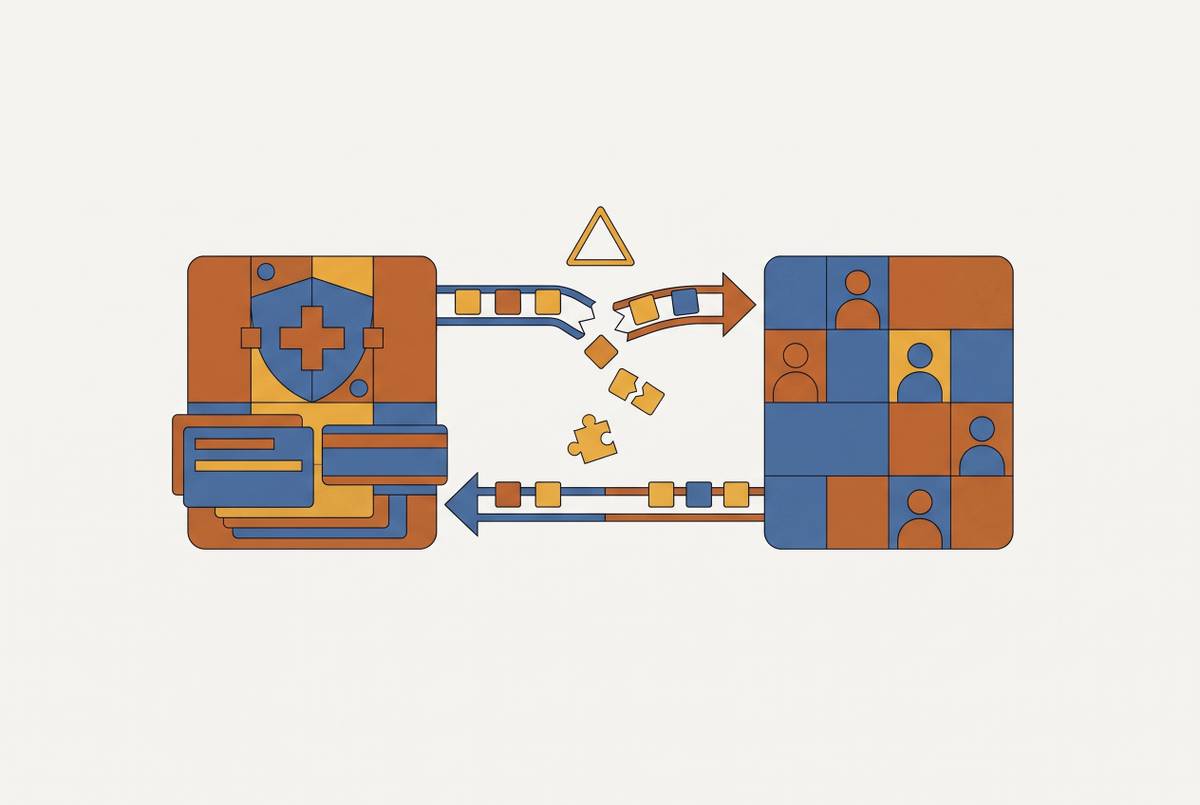
Compatibility requires data exchange. The broker needs census information, including employee names, addresses, dates of birth, employment status, dependent information, and compensation, for ACA reporting and carrier enrollment. It also needs benefit elections and coverage tiers so carrier rosters and payroll deductions stay aligned. Life events such as hires, terminations, marriage, and birth trigger enrollment windows and COBRA notices, while work locations inform state compliance.
A broker does not need access to change payroll runs, control employee records or organizational structure, or install a proprietary platform in place of the HRIS. Requiring migration collapses two independent decisions into one. For an employer evaluating brokerage without changing HR software, that requirement should be a disqualifier.
The practical test is how the data moves. Employers should ask whether census information is exchanged through manual exports, an API, or an EDI feed to carriers, both at renewal and during the year. They should also establish who keeps carrier rosters synchronized with HRIS terminations. A lag can leave the employer paying for unnecessary coverage or allow a terminated employee to continue using it. For companies hiring and terminating frequently across several states, the broker should explain how its onboarding and offboarding operations maintain that alignment without taking over the HR data stack.
How to run the evaluation as a structured conversation, not a vendor demo
Start with the employee who calls at 9pm about a claim dispute. Ask the broker to walk through what happens and connect the answer to its named team, employee support channel, and written response commitments.
Then ask for the last RFP the broker ran for a company of similar size and industry. Request evidence that it modeled level-funding, high-performance networks, and pharmacy carve-outs, rather than accept a general claim that it shops the market. No documentation means no demonstrated process. Use the same standard for compliance by requesting a plan-year calendar with deadlines and assigned responsibilities. Ask how the broker would flag a new remote hire in California who triggers a state registration obligation and distinguish its advisory role from the payroll vendor’s work.
Next, ask which HRIS systems the broker has worked with recently, how census data is exchanged, and who owns carrier roster updates after terminations. Disqualify a broker that requires HRIS migration. Spine, an AI-native benefits brokerage for tech companies that works on top of the HRIS a team already runs and is paid by carriers rather than the employer, is one example of a broker built to avoid that requirement. Before engagement, request its written compensation disclosure under the Consolidated Appropriations Act, covering direct and indirect compensation above the regulatory threshold in the aggregate from carriers or vendors. An unwillingness to provide that document is incompatible with the role of a serious compliance partner.
Complete these conversations before the planned PEO exit so broker selection supports uninterrupted coverage. The resulting engagement should define the broker’s work and data dependencies without creating a separate case for engineering or finance to approve an HRIS replacement.